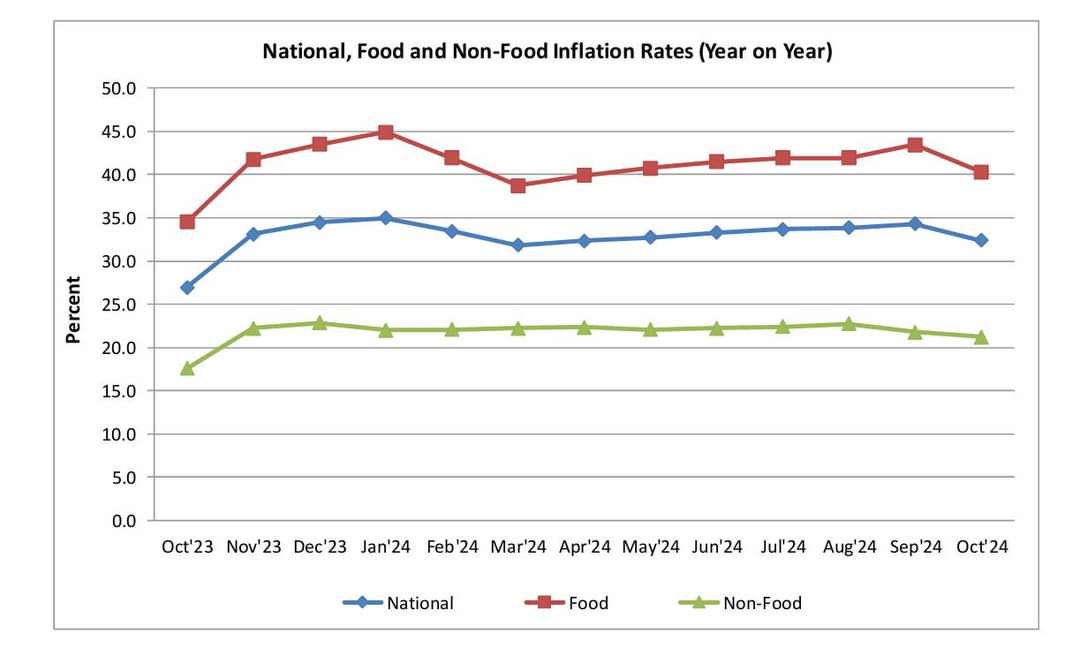
Malawi’s headline inflation rate continues to show signs of improvement down 540 basis points(bps) to 27.0% as of November 2024 from 32.4% in September 2024. The decline was primarily driven by a drop in food inflation from 40.3% to 33.7% and non-food inflation from 21.2% to 17.2%. Although this development offers a glimmer of hope amidst persistent economic challenges, staple food maize prices increased by 5% during the same period.
- The national month-to-month inflation rate stood at 3.2% in November, with food inflation rising by 4.1% and non-food inflation by 1.7%. The disparity between rural and urban inflation rates was also notable(Urban Inflation at 2.6%, Rural Inflation at 3.5%)
- The overall CPI increased from 200.3 in October to 206.7 in November, showing that prices of goods and services continue to rise at a faster rate.
- The weekly average retail price of maize increased from MK826/kg to MK864/kg
‘The decline in the Year-on-Year inflation rate is mainly driven by a slower rate of increase in prices recorded in November 2024 compared to the same period last year. It is important to note that in addition to the usual factors affecting inflation, there was a sharp rise in the prices of both food and non-food items following a 44 percent devaluation in November last year. While overall prices of food and non-food items hiked in November 2024, the magnitude of the increase is significantly less than what was recorded during the same period last year resulting in the November 2024 Year-on-Year inflation rate dropping substantially’ the NSO report reads.
What Does This Mean for an ordinary Malawian?
In simple terms, the decline in inflation from 32.4% to 27.0% means that while prices are still rising, they are doing so at a slower rate compared to previous month. While this might bring slight relief, it doesn’t mean prices are dropping—just that they’re increasing more gradually. Think of it as a car slowing down—it’s still moving forward, but not as quickly as before.